
When people talk about “the war between Israel, Palestine and the United States,” the first useful step is to slow the sentence down. This is not a simple three-country war with three equal sides.
It is a long Israeli-Palestinian conflict, a recent and devastating war between Israel and Hamas in Gaza, a wider regional security crisis and a major US role as Israel’s ally, arms supplier, diplomatic actor and humanitarian donor. Palestinians are not a single institution either: the term includes civilians, the Palestinian Authority in the West Bank, Hamas in Gaza, other armed groups and a large diaspora.
That distinction matters. It keeps civilians from being treated as governments. It keeps Palestinians from being collapsed into Hamas. And it keeps the United States from being described as if it were in exactly the same position as Israel or Palestinian civilians.
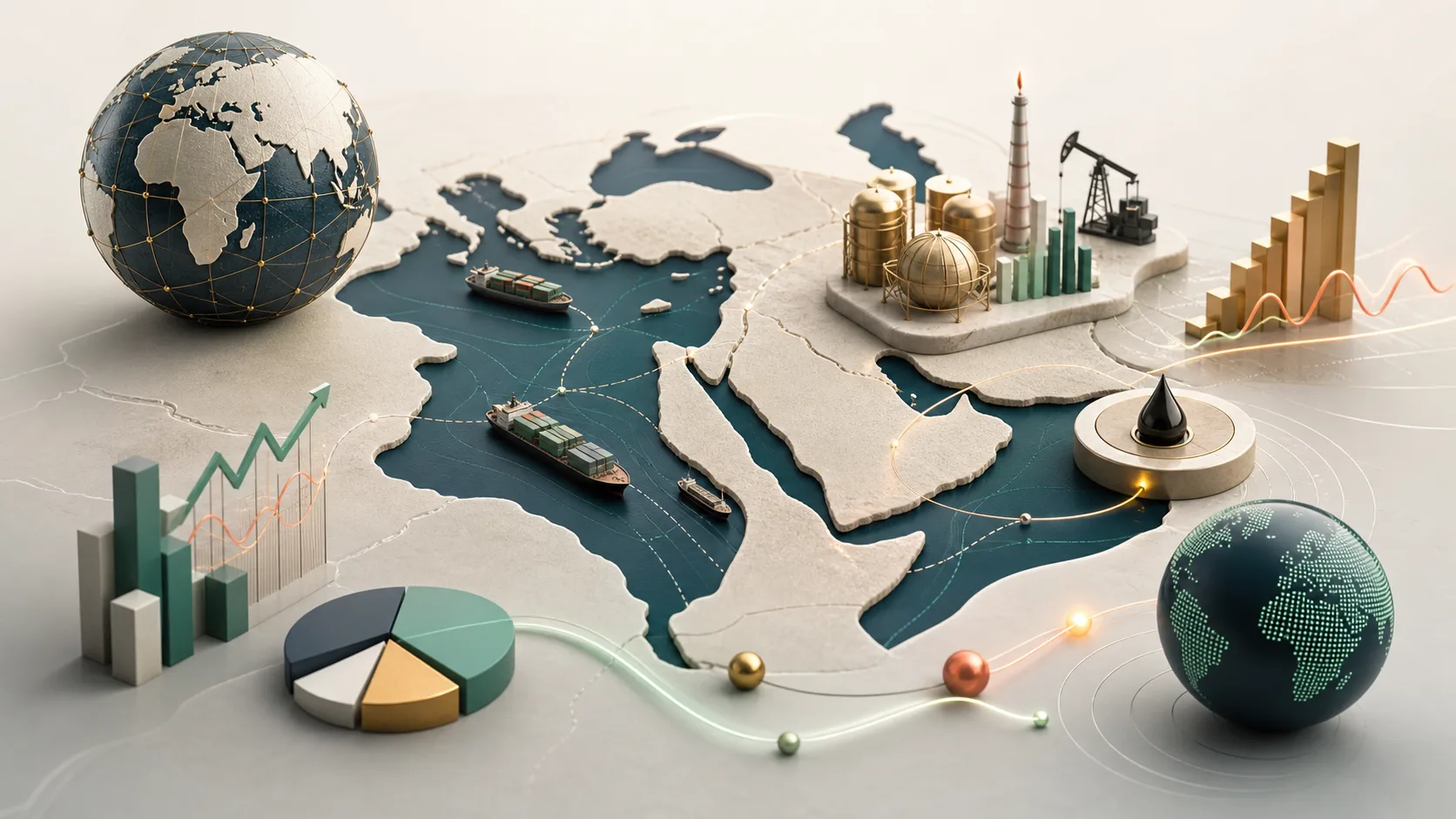
This article explains the issue in neutral terms: what is being contested, why the US role matters and how the conflict can affect energy, shipping, inflation, financial markets and reconstruction.
What the conflict is about
The Israeli-Palestinian conflict involves territory, security, sovereignty, national recognition, displacement, borders, Jerusalem, settlements, refugees and civil rights. It did not begin in 2023, but the current phase changed sharply after the Hamas-led attacks on Israel on October 7, 2023 and Israel’s military response in Gaza.
Israel says its central goals are security, the return of hostages and preventing Hamas from retaining military and political capacity in Gaza. For many Israelis, the trauma of October 7 reinforced the belief that the threat is existential.
For Palestinians, the dominant experience is different: prolonged occupation, blockade, movement restrictions, destroyed homes, civilian deaths, humanitarian crisis and the absence of a fully recognized sovereign state. For many Palestinians, the war in Gaza is part of a wider history of displacement and denied rights.
Those narratives do not cancel each other out. A neutral analysis has to recognize real security fears in Israel and deep civilian suffering among Palestinians. It also has to separate civilians from governments, armies and militant groups.
Where the United States fits
The United States is central because it has had a strategic relationship with Israel for decades. That relationship includes military aid, defense cooperation, diplomatic support and regional coordination. At the same time, Washington has tried to shape ceasefire talks, hostage agreements, humanitarian access and possible postwar arrangements for Gaza.
This puts the US in a difficult position. For Israel’s supporters, American backing is seen as a security guarantee in a volatile region. For critics, that same backing reduces pressure on Israel and makes Washington partly responsible for some consequences of the war. Within the United States, the debate is intense: weapons transfers, humanitarian aid, human rights, regional alliances and the limits of US influence all collide.
So the more precise way to frame “Israel, Palestine and the United States” is this: the US is not merely a bystander, but it is not simply one of the two main combatants in Gaza either. It is an outside power with very large military, financial and diplomatic influence over the environment in which the war takes place.
Why a local war becomes a global economic issue
Not every local war shakes the global economy. This one can because it is taking place in a region that matters for energy, shipping and military alliances.
The Middle East includes major oil and gas producers. It also sits near logistical chokepoints such as the Suez Canal, the Red Sea, Bab al-Mandeb and the Strait of Hormuz. Even when production is not directly hit, escalation risk can raise energy prices, insurance costs, freight rates and financing costs.
That is why markets react not only to what has happened, but to what might happen. If investors believe the war could spread, ships could avoid certain routes or energy producers could be affected, the price of risk rises before a full disruption occurs.
The mechanism is cold, but familiar: uncertainty appears first, and then the cost of protecting against it follows.
Energy is the fastest channel
Oil and gas are the fastest link between war and inflation. If energy becomes more expensive, transport, industrial production, fertilizer, food and electricity can become more expensive too.
That does not mean every rise in gasoline or diesel prices comes directly from the conflict. Energy prices also depend on global demand, inventories, OPEC+, US production, exchange rates, taxes and weather. But a Middle East crisis can add a risk premium: buyers and investors pay more to protect against possible disruption.
The Strait of Hormuz is an important example. The US Energy Information Administration estimated that around one-fifth of global petroleum liquids consumption passed through it in 2024. If a regional crisis threatens that route, even without a full closure, the market becomes more sensitive.
For energy-importing countries, this can work like an external tax: import bills rise, currencies can come under pressure and central banks may have less room to cut interest rates. For exporters, higher prices can support revenue, but they also bring instability, political risk and pressure on consumers.
Shipping: longer routes, higher prices
Another channel is maritime transport. When routes through the Red Sea and Suez Canal become risky, ships may reroute around southern Africa. That adds distance, fuel, delivery time, insurance costs, crew costs and port congestion.
In the short run, the impact shows up in freight rates. Later, it can appear in final prices, especially for imported goods, processed foods, industrial parts and agricultural inputs. UNCTAD has warned that disruptions around Suez and Panama raise costs and hit vulnerable economies, island states and import-dependent countries harder.
This effect is less visible than oil, but it matters. A manufacturer that receives components two weeks late may produce less. A retailer facing higher freight costs may pass some of that along. A poor country that imports food and fuel suffers more because those items take a larger share of household income.
Financial markets turn uncertainty into price
Wars also affect stocks, bonds, currencies and credit. When fear rises, investors often look for assets considered safer, demand higher yields to lend to riskier countries and companies, and reduce exposure to emerging markets.
The IMF describes three main global transmission channels for Middle East conflict: energy, supply chains and financial conditions. In plain language, war can make energy more expensive, goods harder to move and money more expensive for borrowers.
The impact is uneven. Advanced economies with deep financial markets and strong currencies usually absorb shocks more easily. Countries with high debt, low reserves, dependence on imported energy or already-high inflation are more exposed.
For Latin America, the impact can come through oil, exchange rates, food, fertilizer, global interest rates and risk appetite. Some commodity exporters may benefit from higher prices, but consumers and firms can still face higher costs.
The Palestinian economy and reconstruction
The most direct economic impact is where the war is happening. Gaza has suffered extensive damage to housing, infrastructure, public services and economic activity. The World Bank, together with the United Nations and the European Union, has estimated recovery and reconstruction needs in the tens of billions of dollars, with productive activity still heavily constrained.
Reconstruction is not just a construction problem. It requires security, material access, governance, financing, schools, hospitals, water, power, banking services, jobs and enough confidence for businesses to operate again.
The West Bank is also affected by movement restrictions, income losses, fiscal pressure on the Palestinian Authority and weaker activity. Even when there is a ceasefire in Gaza, recovery does not begin automatically. Without political and logistical predictability, reconstruction remains slow, costly and vulnerable to renewed disruption.
Defense spending and public priorities
Long conflicts also change government budgets. Directly involved countries spend more on defense, security, reconstruction and assistance. Allies may increase military or humanitarian aid. More distant governments may add strategic reserves, naval patrols or defense spending because of regional instability.
The problem is that public budgets are finite. More defense spending can support parts of industry in the short run, but it can also add pressure to public debt, inflation and competition for money that might have gone to health, education, infrastructure or tax relief.
That is one reason wars can leave long economic scars. The cost does not end when the headline leaves the front page.
How to read the news without falling into propaganda
In conflicts like this, the first rule is to distrust explanations that are too simple. If an article treats all Israelis as the government, all Palestinians as Hamas or all Americans as one political position, it is probably flattening reality.
It helps to separate four questions:
- Who is the actor: a government, army, armed group, civilian, international organization or company?
- Is the claim confirmed, estimated, alleged or opinion-based?
- Is the economic impact direct, such as destruction and blockade, or indirect, such as freight and risk costs?
- Does the analysis show costs for more than one side, or only reinforce a conclusion it already wanted?
Neutrality does not mean pretending everyone suffers in the same way or has the same power. It means using clear categories, recognizing asymmetries, avoiding dehumanization and not turning uncertainty into certainty.
For a similar way to separate headlines from signals, see AI investment signals.
The main point
The Israeli-Palestinian conflict is first a human and political crisis. The United States matters as a decisive outside power, especially because of its relationship with Israel, its diplomatic capacity and its financial and military weight.
The impact on the global economy comes through concrete channels: energy, maritime transport, inflation, interest rates, financial risk, military spending and reconstruction. Those effects vary by country. Energy importers, indebted economies and poorer households tend to suffer more when energy, food and credit become more expensive.
The most neutral reading avoids slogans. This is not a simple war between “Israel, Palestine and the US.” It is a connected set of conflicts, alliances and economic shocks. Understanding that structure does not solve the tragedy, but it helps readers follow the news with less noise and more responsibility.